Ever wondered how a company sells to another business, which then sells to the end customer? That’s b2b2c in action — a game-changing model blending business, value, and customer reach like never before.




What Exactly Is B2B2C?

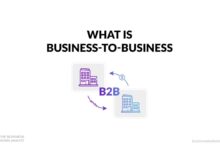
The term b2b2c, short for Business-to-Business-to-Consumer, describes a hybrid commerce model where one business (the first ‘B’) provides products or services to another business (the second ‘B’), which then delivers them to the end consumer (the ‘C’). This model is not just a chain of transactions; it’s a strategic ecosystem that leverages collaboration, shared branding, and mutual growth.
The Core Mechanism of B2B2C
At its heart, b2b2c operates on a three-tier relationship. The first business creates value — say, a software platform, a product line, or a service infrastructure. The second business integrates this offering into its own customer experience, often rebranding or customizing it. Finally, the end consumer interacts directly with the second business, unaware (or only partially aware) of the original provider.
- The first B supplies the core product or technology.
- The second B acts as the distributor, retailer, or service integrator.
- The C is the final user who benefits from the combined value.
For example, consider a fintech company that develops a payment processing API (first B). A retail bank (second B) integrates this API into its mobile app, allowing customers (C) to make seamless payments. The customer sees only the bank’s interface, but the tech behind it comes from the fintech firm.
How B2B2C Differs From B2B and B2C
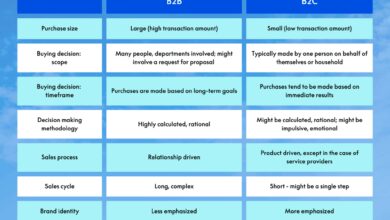
While B2B focuses on transactions between businesses and B2C targets end consumers directly, b2b2c uniquely bridges both worlds. In traditional B2B, the end-user isn’t the focus. In B2C, the brand owns the full customer journey. But in b2b2c, both businesses share responsibility for customer experience, data, and branding.
“The b2b2c model is not just about distribution — it’s about co-ownership of the customer relationship.” — Harvard Business Review
This shared ownership introduces complexities in data sharing, brand alignment, and customer service, but also unlocks massive scalability and market penetration.
Why B2B2C Is Gaining Massive Traction
In today’s hyper-connected economy, companies are no longer competing just on product quality — they’re competing on ecosystem strength. The b2b2c model enables businesses to scale rapidly without building everything from scratch. It’s a force multiplier for innovation, reach, and customer engagement.
Expanding Market Reach Without Direct Sales
One of the biggest advantages of b2b2c is the ability to access new markets through established partners. A small SaaS company, for instance, can integrate its tool into a large e-commerce platform used by thousands of merchants. Suddenly, it reaches millions of end users without hiring a single salesperson.
- Partners provide instant access to existing customer bases.
- Reduced customer acquisition costs (CAC) through shared infrastructure.
- Geographic expansion becomes easier via local partners.
According to a McKinsey report, companies leveraging b2b2c models see up to 30% faster market penetration compared to traditional B2B approaches.
Enhanced Customer Experience Through Integration
B2B2C allows for deeply embedded solutions that feel native to the end user. Instead of forcing customers to switch platforms, the service is integrated seamlessly into their existing workflows. This reduces friction and increases adoption.
Take healthcare tech: a diagnostic AI tool (B1) integrated into a hospital’s patient portal (B2) allows patients (C) to receive instant insights without downloading new apps. The experience feels cohesive, trustworthy, and efficient.
Real-World Examples of B2B2C in Action
The b2b2c model isn’t theoretical — it’s already reshaping industries from retail to finance. Let’s explore some of the most impactful implementations.
Amazon Web Services (AWS) and SaaS Startups
AWS provides the infrastructure (servers, storage, AI tools) that countless SaaS companies rely on. These startups build their applications on AWS and sell directly to consumers or businesses. The end user may never know AWS is powering the app, but the entire ecosystem depends on it.
- AWS handles scalability and uptime.
- SaaS companies focus on UX and features.
- Consumers enjoy reliable, high-performance apps.
This is a classic b2b2c loop: AWS (B1) → SaaS company (B2) → End user (C).
Stripe and E-Commerce Platforms
Stripe offers payment processing APIs to platforms like Shopify, WooCommerce, and BigCommerce. These platforms embed Stripe into their checkout systems, allowing merchants to accept payments effortlessly. The merchant (B2) sells to consumers (C), while Stripe (B1) remains the invisible engine.
According to Stripe’s official site, over 100 million businesses use its technology indirectly through such integrations.
Key Benefits of the B2B2C Model
Adopting a b2b2c strategy isn’t just about staying relevant — it’s about unlocking strategic advantages that traditional models can’t match.
Scalability Without Overhead
One of the most compelling benefits of b2b2c is the ability to scale rapidly without proportional increases in operational costs. By leveraging partner networks, companies can multiply their reach without building massive sales teams or customer support infrastructures.
- No need to manage direct customer relationships at scale.
- Partners handle onboarding, support, and billing.
- Focus shifts to product innovation and partner enablement.
This lean approach is especially valuable for tech companies aiming to go global quickly.
Shared Risk and Co-Investment
In a b2b2c relationship, risks are distributed. If a product fails to gain traction, the burden isn’t solely on the original provider. Partners have skin in the game — they’ve invested in integration, training, and marketing.
“When both parties benefit from success, they’re more likely to invest in making it happen.” — Forbes
This alignment fosters long-term collaboration and reduces churn.
Challenges and Pitfalls of B2B2C
Despite its advantages, the b2b2c model comes with significant challenges. Success requires careful planning, clear agreements, and ongoing coordination.
Data Ownership and Privacy Concerns
Who owns the customer data? The first business (B1) may generate insights from usage, but the second business (B2) interacts directly with the consumer. This creates tension over data rights, GDPR compliance, and personalization capabilities.
- B1 may want access to behavioral data for product improvement.
- B2 may resist sharing data to protect customer relationships.
- Consumers may be unaware of how their data is shared across entities.
Clear data-sharing agreements and transparent privacy policies are essential to avoid legal and reputational risks.
Brand Dilution and Control Issues
When your product is embedded within another company’s platform, you lose direct control over branding and customer perception. If the partner delivers a poor experience, your reputation may suffer by association.
For example, if a white-labeled app crashes frequently, users may blame the visible brand (B2), but the underlying tech provider (B1) still faces indirect fallout. Maintaining quality standards across partners requires robust SLAs and monitoring tools.
How to Build a Successful B2B2C Strategy
Transitioning to a b2b2c model isn’t just about technology — it’s a strategic shift that requires rethinking sales, marketing, and customer success.
Choose the Right Partners
Not all businesses make good b2b2c partners. Look for companies that:
- Have a strong customer base aligned with your target market.
- Value innovation and are open to integration.
- Share your commitment to quality and security.
Vet potential partners thoroughly. Conduct technical audits, review their customer satisfaction scores, and assess their long-term vision.
Design for Seamless Integration
Your product must be easy to embed. This means:
- Offering well-documented APIs and SDKs.
- Providing white-labeling options with customizable UIs.
- Ensuring compatibility with common platforms (e.g., Salesforce, Shopify, WordPress).
Tools like Postman can help developers test and debug integrations efficiently.
The Future of B2B2C: Trends to Watch
As digital ecosystems evolve, the b2b2c model is poised to become even more dominant. Here are the key trends shaping its future.
Rise of Embedded Finance and Insurance
Embedded finance — where financial services are integrated into non-financial platforms — is a booming b2b2c sector. Examples include:
- Buy-now-pay-later (BNPL) options in e-commerce checkouts.
- Insurance offered during car rentals or travel bookings.
- Banking services inside accounting software like QuickBooks.
According to McKinsey, the embedded finance market could reach $7 trillion by 2030.
AI-Powered Personalization Across Ecosystems
AI is enabling hyper-personalized experiences even in b2b2c setups. By analyzing cross-platform behavior (with consent), businesses can deliver tailored recommendations, pricing, and support — all while maintaining privacy boundaries.
For instance, a fitness app (B2) using a health analytics engine (B1) can offer personalized workout plans based on data from wearables, nutrition apps, and medical records — all integrated behind the scenes.
B2B2C vs. Traditional Models: A Strategic Comparison
To fully appreciate the power of b2b2c, it’s helpful to compare it directly with traditional B2B and B2C models.
Customer Acquisition: Cost and Efficiency
In B2B, customer acquisition is slow and expensive, often requiring long sales cycles. In B2C, it’s faster but highly competitive. B2B2C strikes a balance: partners handle acquisition, reducing CAC for the original provider.
- B2B: High CAC, long sales cycle, deep relationships.
- B2C: Medium CAC, mass marketing, low-touch onboarding.
- B2B2C: Low CAC for B1, leveraged reach, shared onboarding.
This makes b2b2c ideal for companies with scalable digital products.
Revenue Models and Profit Sharing
B2B2C often involves revenue-sharing agreements rather than flat fees. This aligns incentives — both parties win when the end customer succeeds.
- Subscription splits (e.g., 70/30 revenue share).
- Pay-per-transaction models.
- Hybrid models with base fees + performance bonuses.
Transparency in billing and reporting is critical to maintaining trust.
Implementing B2B2C: A Step-by-Step Guide
Ready to adopt the b2b2c model? Follow this actionable roadmap.
Step 1: Audit Your Product for Partner Readiness
Ask: Is your product modular, scalable, and easy to integrate? Can it be white-labeled? Does it have robust APIs? If not, invest in making it partner-friendly before approaching businesses.
Step 2: Identify and Engage Potential Partners
Use tools like LinkedIn Sales Navigator or Crunchbase to find companies with complementary offerings. Reach out with a value proposition that highlights mutual benefits — not just your product’s features.
Step 3: Co-Develop Go-to-Market Strategies
Work with partners to create joint marketing campaigns, training programs, and support workflows. The more aligned you are, the smoother the launch.
Step 4: Monitor, Optimize, and Scale
Track KPIs like integration success rate, customer satisfaction, and revenue per partner. Use feedback to refine your offering and expand to new partners.
What is b2b2c?
B2B2C, or Business-to-Business-to-Consumer, is a model where a company sells its products or services to another business, which then delivers them to the end consumer. It combines elements of B2B and B2C, enabling shared value creation across the chain.
How does b2b2c benefit small businesses?
Small businesses can leverage b2b2c to access larger markets through established partners, reduce customer acquisition costs, and scale without heavy investment in sales and distribution infrastructure.
Is b2b2c the same as reselling?
No. While reselling involves a business buying and reselling a product under its own brand, b2b2c often includes deeper integration, shared branding, and co-owned customer experiences. The original provider may remain visible or invisible depending on the setup.
What industries use b2b2c most?
Common industries include SaaS, fintech, healthcare tech, e-commerce platforms, and logistics. Any sector where digital integration enhances customer experience is ripe for b2b2c adoption.
How do you handle customer support in a b2b2c model?
Support responsibilities are typically shared. The second business (B2) handles first-line support, while the first (B1) provides backend or technical assistance. Clear SLAs define escalation paths and response times.
The b2b2c model is redefining how value flows in the digital economy. By connecting businesses and consumers through strategic partnerships, it enables scalability, innovation, and deeper customer engagement. While challenges like data sharing and brand control exist, the benefits far outweigh the risks for companies willing to embrace collaboration. As ecosystems grow more interconnected, b2b2c won’t just be an option — it will be the standard.
Further Reading: